nchsneasc13b

New Canaan High School educators whose last name begins with the letter S-Z author this blog.
Those whose last name begins with A-R author nchsneasc13

Tuesday, November 15, 2011

Message to faculty about rubric development


Hello Colleagues,

Thank you all for the hard work you put into rubric writing last week. While we received a lot of positive feedback, we also know that this process is not at all easy. As we follow Thursday’s faculty meeting with rubric revision time, it’s important that we maintain perspective on the current task.
When we unanimously passed our statement on Core Values, Beliefs and Learning Expectations, we stated that we want our students to be “active participants in their learning,” by which we mean that we want them to choose resources, set goals, self-monitor, self-assess and reflect. In order to achieve this goal, we need to provide concrete information about our expectations, and that’s where the rubrics come in.

The Process
Now, the process is messy, and where we are right now is near the end of the first stage of a three-stage process:

  1. Stage one: We draft rubrics.
  2. Stage two: We use them in pilot form to communicate with students about the work we’re asking them to do, and then ask the students to assess their work using the rubric, while we do the same. From this, we identify the challenges and advantages of using the rubrics to communicate with students and assess student work, and we make recommendations for changes.
  3. Stage three: We revise the rubrics based on the data collected from the pilot experiment.
A Pressing Concern: Assessment
If there was one overarching concern expressed on our PD Day, it was, “But I can’t see how I’ll use this rubric to assess my students.” If you were one of the ones saying this, you’re probably right.

But this raises misconception number one: that our NEASC rubrics are for assessment. What we are working on are analytical rubrics, not assessment rubrics. While they will be used for assessment, their primary function is to clearly communicate expectations. If we think of them as communication of our learning expectations so that students can be “active participants,” the writing may be a bit easier.

In addition, you may not ever use the problem-solving rubric, for example. But if we can all speak the same language and communicate the same expectations when students are solving problems in our disciplines, you can imagine the effective habits of mind students will develop as they go through all our subjects in ninth grade, in tenth grade…you can see where we’re going. The clearer we are about what we want our students to do, the more quickly they will internalize our school’s standards for their performance.

If you’ve read this far, thank you. If we can understand the stages of the process, our work can be much easier on Thursday.

See you then.

Your Friends on the Steering Committee

Tuesday, November 8, 2011

Professional Development Day - Rubrics

Click on picture
to see slideshow
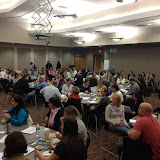
We spent election day 2011 developing rubrics for our 21st century learning expectations. We used the NCHSNEASC13 website rubric page to access the instructions and rubric template, then brainstormed to develop indicators for each expectation. This is slide show of our day's activity.


Leadership meeting

The NEAS&C Steering Committee met with the Standards Committee co-chairs to assign expectations to standards committees and determine which departments would pilot which expectations rubrics.

We also reviewed the agenda for the Nov. 8 Professional Development day, and articipants gave feedback on the NCHSNEASC13 website's new rubric page.

It was recommended that we remove the points, values and total columns and rows from the NCHS rubric template to minimize confusion.


Friday, November 4, 2011

NEAS&C activities for November 8th PD Day

The faculty sent in several more rubrics this week, so we reassessed our meeting needs and called a quick twenty minute after school meeting with steering committee and committee co-chairs on Monday, November 7th from 2:15-2:35. At the meeting we will review the following day's activities.

As PD leaders, Cathy and Chris offered to develop a Checklist for the PD day, which was quite helpful.

Wednesday, November 2, 2011

Steering Committee meeting canceled

A freak October snowstorm set us back some. Since two school days were canceled, our scheduled November 1st steering committee meeting was also canceled. Our original plan to review and filter NCHS rubrics with the steering committee was deferred to the PD Day on November 8th. Mike emailed the steering committee about the new plan.

Wednesday, October 26, 2011

Resources on creativity, critical thinking, and rubric design

A Tweep (Twitter speak for someone you know through Twitter, but have never met face to face: Twitter + peep = Tweep), a retired librarian now living in Florida, Jerry Blumengarten, just Tweeted a link to his Critical Thinking page. This prompted me to ask him about a creativity page, and resources for rubrics. They are all posted on our nchsneasc13 resources page. Twitter = the best PD resource on planet earth ;-)

Tuesday, October 25, 2011

Steering Committee co-chairs meeting with Principals

In fairness to the recorder, these notes were taken on an iPad during first and second lunch, while standing at the cafeteria ramp :-)

Big Question: How is steering committee going to spend Nov. 8? In Steering Committee, or with standards committees?

Who is writing the first draft of the rubrics?Standards committees?If standards, the steering committee should participate. If not, then steering committee should meet together.

We clearly need a rubric forcritical thinking. What indicators should be included? While observing an engineering class, Ari asked if we had an engineering rubric - one that included problem solving. The answer was yes. We should take a look at that.

We agreed to collect all the school rubrics via email. We will need both digital and hard copies (if only a hard copy exists, we will create a digital version). There was some discussion about this - whether to collect them all or just those perceived as relevant to expectations. We decided to collect them all, in case Steering Committee members saw correlation where folks who live with them every day did not.

We will align the rubrics with learning expectations, then assign each one to a department. The department will pilot using the rubric, and report back with recommendations for revision.

The Steering Committee will meet on November 1st, at which point we will sort through the collected rubrics and assign each one an expectation, and then which committee will work on which expectation.

One thing we should address on November 8th is language. Our rubrics should reflect a common language - one that students can understand. The committees will go through their assigned rubric packets and aggregate a list of commonly used terms (word cloud opportunity?). They will also determine which parts of the rubric will cross departments, and which department will pilot which expectation rubric.

When departments meet, at least one person in that meeting will have participated in the committee meeting responsible for that department's expectation allocation, and will be able to explain the rationale for the departments' assigned pilot. Then they will use the collected rubrics and NEAS&C examples to develop new ones.

We had a conversation about indicators and rubric adoption - one I was not able to transcribe - distracted and hungry? Suffice it to say that Mike spoke eloquently on the topic, and that when necessary, I am confident he will be able to reconstruct what he said beautifully :-)

After the pilot, we will look at rubric formats and scales, but we think we should live with them  for a bit before doing that.